
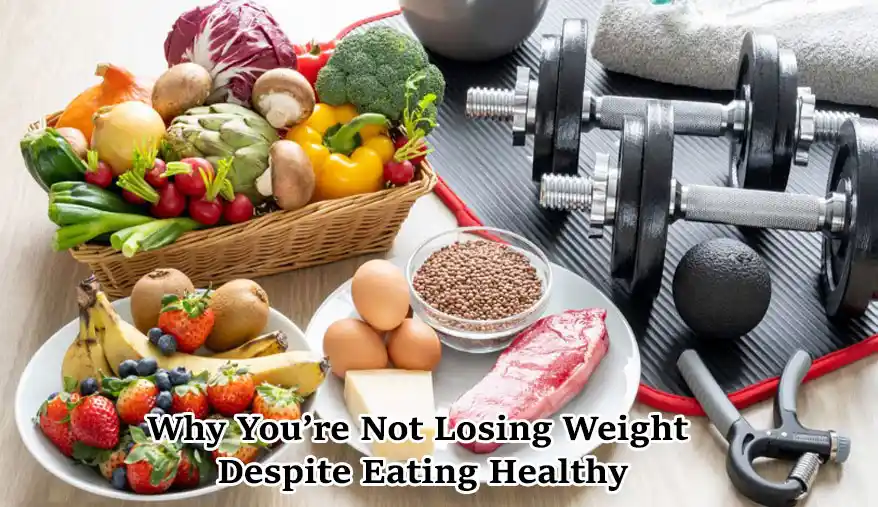
You cook at home, choose whole foods, limit sugar, and make what most people would call healthy choices. Yet the scales refuse to move. For many adults in Ireland, this situation is both confusing and frustrating. Understanding why you’re not losing weight despite eating healthy requires looking beyond food quality and examining how the body responds to stress, energy intake, hormones, sleep, and daily movement.
Healthy eating improves overall wellbeing, but weight loss depends on whether the body feels balanced and supported enough to release stored fat. When key biological signals are disrupted, fat loss can stall even with good dietary habits. This article explores the hidden reasons behind stalled weight loss and explains what actually helps restart progress.
Eating Healthy Does Not Automatically Mean Weight Loss
One of the biggest misconceptions around weight loss is that “healthy food” guarantees fat loss. In reality, eating healthy focuses on food quality, while weight loss depends on energy balance and hormonal signals.
You can eat nutritious foods and still:
-
Consume more energy than your body needs
-
Trigger frequent blood sugar spikes
-
Increase stress hormones
-
Slow metabolism through under-fuelling
This is often the first step in understanding why you’re not losing weight despite eating healthy, especially for people who have followed clean diets for years.
Portion Sizes Can Still Be the Issue
Healthy foods are not calorie-free.
Foods like nuts, seeds, olive oil, avocado, cheese, granola, smoothies, and natural snacks are nutrient-rich but energy-dense. Because they are considered “good”, portion awareness often disappears.
Over time, small daily excesses can lead to fat storage, even when food quality is high.
Not Losing Weight Despite Eating Healthy Due to Metabolic Adaptation
Metabolism is not fixed. It adapts to long-term eating patterns.
Many people eat healthy but also eat too little for extended periods. When this happens, the body slows its energy use to protect itself.
How Not Losing Weight Despite Eating Healthy Happens Over Time

With long-term calorie restriction:
-
Resting metabolism decreases
-
Thyroid activity may slow
-
Fat breakdown becomes inefficient
-
The body prioritises energy conservation
This adaptive response explains why you’re not losing weight despite eating healthy, even with discipline and consistency.
Stress Is Quietly Blocking Fat Loss
Stress is one of the most underestimated causes of weight loss resistance.
In Ireland, long working hours, financial pressure, family responsibilities, and constant screen exposure are common stressors. Chronic stress keeps cortisol levels elevated.
High cortisol:
-
Encourages fat storage
-
Reduces fat breakdown
-
Increases appetite and cravings
No diet, no matter how healthy, can override a constantly stressed nervous system.
Lack of Muscle Slows Fat Burning
Muscle tissue burns more energy than fat tissue.
If weight loss efforts rely mainly on diet and cardio, muscle mass may slowly decline. This reduces resting metabolism and makes fat loss harder over time.
Strength training helps preserve muscle and sends a signal to the body that energy is needed, supporting fat loss rather than fat storage.
Blood Sugar Spikes From “Healthy” Foods
Not all healthy foods support stable blood sugar levels.
Fruit juices, smoothies, dried fruits, honey, and refined grains may be natural, but when eaten without protein or fibre, they can cause rapid blood sugar rises.
Insulin’s Role in Not Losing Weight Despite Eating Healthy
Frequent insulin spikes block fat breakdown and encourage fat storage. Over time, this pattern reinforces not losing weight despite eating healthy, especially when meals are carbohydrate-heavy without balance.
Poor Sleep Cancels Out Healthy Eating
Sleep quality has a direct impact on weight regulation.
When sleep is poor:
-
Hunger hormones increase
-
Insulin sensitivity drops
-
Cortisol rises
-
Energy expenditure decreases
Many adults in Ireland unknowingly sabotage weight loss through late nights, irregular sleep schedules, and excessive screen use, even while eating well.
Inflammation Keeps Weight Stuck
Low-grade inflammation makes fat cells resistant to releasing stored energy.
Inflammation can come from:
-
Chronic stress
-
Poor sleep
-
Digestive imbalance
-
Overtraining
-
Highly processed foods
When inflammation is present, the body stays in protection mode, slowing fat loss.
You’re Moving Less Than You Think
Exercise sessions alone do not define daily calorie burn.
Non-exercise activity such as walking, standing, and general movement throughout the day plays a major role in energy expenditure. Long periods of sitting, common in office-based work, reduce fat-burning potential.
Eating healthy without enough daily movement often leads to stalled progress.
Hormonal Balance Matters More With Age

Hormones control how and where fat is stored.
Key hormones involved include:
-
Insulin
-
Cortisol
-
Thyroid hormones
-
Oestrogen and testosterone
When these hormones are out of balance, weight loss becomes difficult regardless of food quality. This is another reason why you’re not losing weight despite eating healthy.
What Actually Helps When You’re Not Losing Weight Despite Eating Healthy
Fat loss improves when the body receives consistent signals of safety and balance.
Practical Changes That Restart Weight Loss
-
Eat enough calories consistently
-
Include resistance or strength training
-
Improve sleep quality
-
Reduce chronic stress
-
Balance meals with protein, fibre, and healthy fats
-
Increase daily movement
These changes help the body shift out of survival mode and allow stored fat to be released.
How Long Does It Take to See Results?
Once the underlying issues are addressed, energy levels often improve first. Visible weight loss usually follows after several weeks of consistency.
Sustainable progress is slower but far more reliable than crash dieting.
Final Thoughts
Eating healthy is a strong foundation for good health, but it is not a complete weight loss strategy on its own. Why you’re not losing weight despite eating healthy has more to do with metabolism, stress, sleep, hormones, muscle mass, and movement than with food quality alone.
When the body feels supported instead of restricted, weight loss becomes a natural response rather than a constant struggle.


