
Across Ireland, many people feel frustrated when they are eating reasonably well yet struggling to lose body fat. They may be walking regularly, cutting back on obvious junk food, and trying to stay active — but progress feels slow or completely stalled.
One often overlooked reason is stress.
Stress and fat storage are closely connected through hormonal and neurological pathways. When the body perceives ongoing pressure — whether from work, financial strain, family responsibilities, or lack of rest — it shifts into a protective mode. In that state, holding on to energy becomes a priority.
Understanding this biological response can remove blame and help people approach fat loss more realistically.
The Body’s Survival System
The human body evolved to survive threat. When danger appears, the brain activates the stress response through the hypothalamic–pituitary–adrenal (HPA) axis. This triggers the release of cortisol and adrenaline.
In short bursts, this system is helpful. It increases alertness, raises blood sugar for quick energy, and sharpens focus.
However, modern stress in Ireland is rarely short-lived. It is often ongoing:
-
Heavy workloads
-
Long commutes
-
Rising living costs
-
Irregular work shifts
-
Constant digital connectivity
When stress becomes chronic, the body does not return fully to baseline. Cortisol remains elevated more frequently — and this influences fat storage.
Cortisol and Abdominal Fat
Cortisol plays a central role in the relationship between stress and fat storage.
When cortisol levels stay elevated:
-
Blood sugar rises
-
Insulin increases
-
Appetite may increase
-
Fat storage becomes more likely
-
Stress and Fat Storage
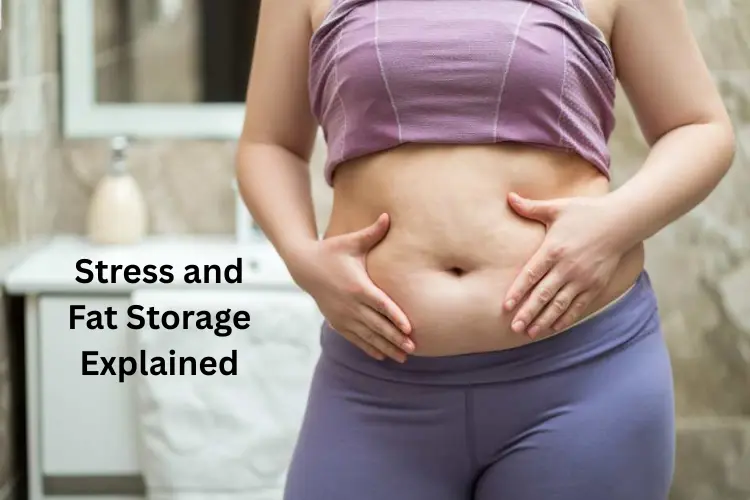
Visceral fat — the type stored around the abdominal area — is particularly responsive to cortisol. This is why chronic stress is often associated with weight gain around the midsection.
The body interprets stress as a signal that energy may soon be needed. Storing fat is a protective strategy.

Blood Sugar Instability Under Stress
Stress not only increases cortisol but also affects blood sugar regulation.
When the body perceives stress, it releases glucose into the bloodstream to prepare for action. If that energy is not used physically — which is often the case with modern psychological stress — insulin works to store it.
Repeated cycles of stress-induced glucose release can contribute to insulin resistance over time.
In Ireland, where sedentary work is common, stress-related glucose spikes are not always offset by movement. This contributes further to fat storage.
Stress and Appetite
Not everyone responds to stress in the same way. Some people lose their appetite temporarily. Others experience strong cravings, particularly for sugary or high-fat foods.
Cortisol can increase appetite, especially when combined with sleep deprivation. Emotional eating often becomes a coping mechanism during stressful periods.
After a long day, grabbing a takeaway or snacking in the evening may feel like relief. This is not weakness — it is the brain seeking reward to counterbalance stress.
Stress and fat storage are linked partly through these behavioural patterns.
Sleep Disruption and Metabolic Impact
Chronic stress frequently disrupts sleep.
Late-night worrying, irregular schedules, or excessive screen time can reduce both sleep quantity and quality. Poor sleep:
-
Increases hunger hormones
-
Lowers satiety signals
-
Raises cortisol further
-
Reduces insulin sensitivity
-
Stress and Fat Storage
In Ireland’s busy culture, sleep often becomes secondary to productivity. However, insufficient rest amplifies the stress–fat storage cycle.
Restorative sleep helps regulate cortisol and stabilise appetite.
The Role of Inflammation
Chronic stress increases systemic inflammation. Elevated inflammatory markers are associated with both mental strain and increased body fat.
Excess body fat itself releases inflammatory compounds, creating a feedback loop:
-
Stress raises cortisol.
-
Cortisol encourages fat storage.
-
Fat tissue increases inflammation.
-
Inflammation influences brain signalling and stress sensitivity.
Breaking this cycle requires addressing stress, not just calories.
Why Dieting Alone May Not Work
When someone experiencing chronic stress tries to lose weight through aggressive calorie restriction, the body may respond defensively.
Severe restriction can:
-
Raise cortisol further
-
Lower metabolic rate
-
Increase fatigue
-
Intensify cravings
-
Stress and Fat Storage
The body perceives restriction as an additional stressor.
This is why stress and fat storage must be considered when designing a fat-loss strategy. Supporting recovery often works better than increasing restriction.
Movement as a Stress Regulator
Physical activity helps metabolise stress hormones.
Brisk walking, resistance training, cycling, or swimming can lower cortisol and improve insulin sensitivity. In Ireland, outdoor movement — even in cooler weather — provides both physical and psychological benefits.
However, excessive high-intensity exercise during already stressful periods may backfire. Moderate, consistent activity is often more effective.
Movement should relieve stress, not add to it.
Nervous System Regulation
The body stores fat more readily when the nervous system feels threatened.
Supporting nervous system balance includes:
-
Consistent sleep routines
-
Regular meal timing
-
Time outdoors
-
Social connection
-
Limiting late-night screen exposure
-
Mindful breathing or relaxation practices
These habits signal safety to the body, reducing the drive to conserve energy.
What Realistic Fat Loss Looks Like Under Stress
When stress is high, rapid fat loss is unlikely. Instead, progress may begin with:
-
Improved energy
-
Better sleep
-
Reduced cravings
-
More stable mood
-
Stress and Fat Storage
As stress reduces, metabolic flexibility improves. Fat loss may follow gradually.
This slower process is more sustainable than crash dieting during high-pressure periods.
Practical Strategies for Irish Lifestyles
Given the pace of modern life in Ireland, realistic adjustments matter.
Consider:
-
Planning simple, repeatable meals during busy weeks
-
Scheduling short daily walks
-
Setting boundaries around work hours where possible
-
Reducing ultra-processed foods gradually rather than completely
-
Prioritising sleep even when schedules are tight
These small adjustments accumulate over time.
The Bigger Picture
Stress and fat storage are part of a complex biological response designed for survival. The body is not working against you — it is responding to perceived pressure.
Recognising this removes the idea that weight gain under stress is purely about willpower.
Fat loss becomes easier when the body feels safe, rested and nourished.
Final Thoughts
Stress and fat storage are closely linked through hormonal, behavioural and neurological pathways. Chronic pressure, common in modern Irish life, can increase cortisol, disrupt sleep, destabilise blood sugar and encourage abdominal fat accumulation.
Rather than responding with stricter dieting or punishing exercise, supporting stress recovery often produces better long-term results.


